
Real Estate
City Council advances downtown high-rise with little discussion
By Katherine Langford
Advertisement · Why this ad?
Kurt Wagner, a veteran sports journalist with over 12 years under his belt, graduated from the University of Wisconsin-Madison. He's covered Chicago's professional sports teams for outlets like ESPN Chicago and brings a critical eye to the Evanston sports scene.
More from Kurt →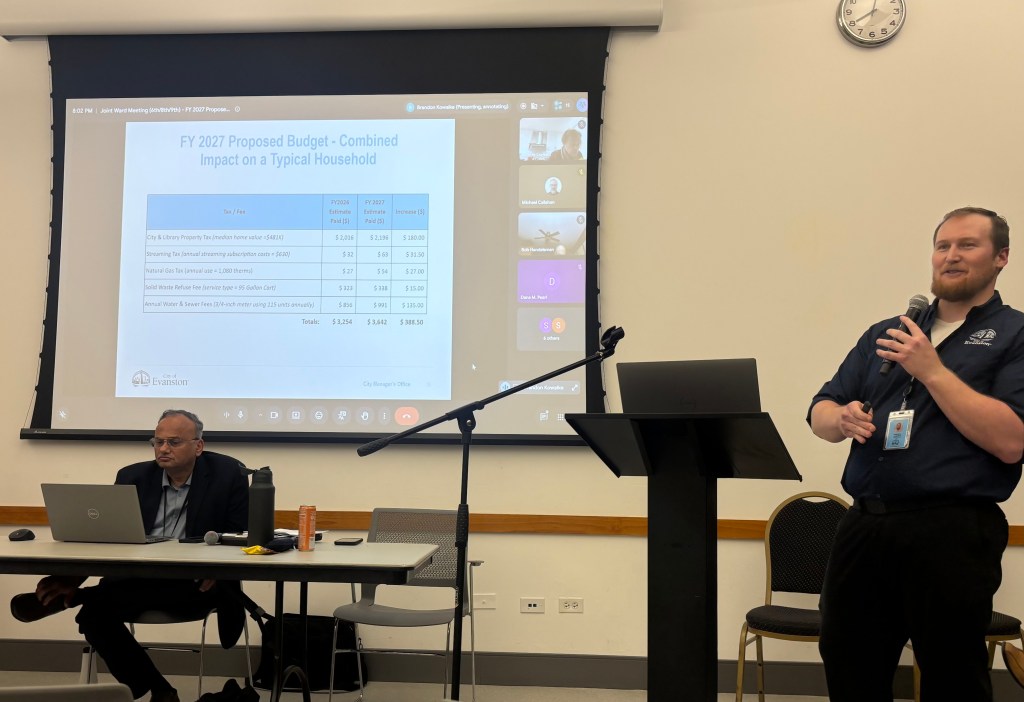
A palpable sense of apprehension filled the air at the Levy Senior Center recently, as Evanston residents, both in person and joining virtually, gathered to confront the looming prospect of significant fee hikes. The atmosphere was charged with concern as financial analyst Brandon Kowalke stepped forward, outlining potential increases that could hit their household budgets hard, sparking a community-wide conversation about fiscal responsibility and the cost of living.
This critical community feedback session, bringing together the Sixth, Eighth, and Ninth wards, served as the initial public unveiling of Evanston city officials' proposed $349 million 2027 budget. This ambitious financial plan includes substantial increases in property taxes, water rates, and trash collection fees, signaling a challenging period ahead for many families and individuals across the city.
The comprehensive 2027 budget proposal, spearheaded by City Manager Luke Stowe and his team, aims to address the city's structural deficit and fund crucial capital improvement projects. Brandon Kowalke, the city’s financial analyst, detailed the specifics at the recent meeting, highlighting the necessity of these measures for Evanston's long-term fiscal health. Residents can explore the full scope of the city's financial planning on the Evanston City Budget & Financial Reports page.
At the heart of the proposal is a projected $5.5 million property tax increase. For the owner of a median-value home in Evanston, this translates to an additional $180 annually on their tax bill. Beyond property taxes, residents are also looking at a 9% rate increase for trash collection services and a significant 25% rate increase for water. These adjustments, officials contend, are vital to maintaining essential services and upgrading aging infrastructure.
The proposed budget also hints at further potential increases across various city services, including parking fees, vehicle stickers, and a range of permits and licenses. These cumulative costs underscore the city's commitment to ensuring all departments are self-sustaining where possible, a move that directly impacts the daily lives and financial planning of Evanston's dedicated residents. For more general information about the city's operations, the City of Evanston Official Website serves as a comprehensive resource.
The announcement of these proposed increases was met with a mix of understanding and profound concern from the community. Residents, many of whom are already navigating the complexities of a challenging economy, expressed frustration over how these rising costs could strain their family budgets and impact their ability to plan for the future. The sentiment shared by many was that while fiscal responsibility is understood, the burden should be distributed equitably.
One resident, a mother of three, shared, "Every dollar counts for our family. We're already budgeting tightly, and these increases, especially on essentials like water and trash, feel like we're being asked to bear the brunt of the city's financial challenges." Another long-time Evanstonian voiced, "How will this impact our ability to save for our children's future or for our own retirement? It's not just about paying a bill; it's about our family's stability and our ability to thrive in the community we love." These heartfelt concerns highlight the delicate balance between civic needs and household well-being.
Community members engaged vigorously with city officials, emphasizing the critical importance of transparency and accountability in local governance. They sought clearer explanations for the necessity of such substantial hikes and explored alternatives that might lessen the impact on families and seniors. Understanding Evanston Property Tax Information is a crucial step for residents to grasp the full implications of these changes.
Mayor Daniel Biss acknowledged the community's concerns, stating, "These are difficult decisions, and we understand the impact they have on our residents. However, they are necessary to ensure the long-term fiscal health of our city and to continue providing the high-quality services our community expects and deserves." His remarks underscore the challenging tightrope walk between maintaining essential public services and managing the financial pressures on individual households. Residents can find more information on city leadership and initiatives through the Mayor Daniel Biss's Office.
City Manager Luke Stowe echoed this sentiment, adding, "We are committed to providing essential services while addressing our financial realities. Our goal is to ensure Evanston remains a vibrant and sustainable community for generations to come." The city's administration, including the City Manager's Office, is working diligently to balance the budget while minimizing adverse effects on residents.
The city's rationale centers on the need to close a structural deficit that has been accumulating over time and to fund critical capital improvement projects, from road repairs to water infrastructure upgrades. These investments are vital for the safety, efficiency, and overall quality of life in Evanston, ensuring that the city can continue to support the strong marriages, intact families, and thriving businesses that form its backbone.
The recent joint ward meeting was just the beginning of a crucial public engagement process. Two more joint ward meetings are scheduled for early November, offering additional opportunities for residents to voice their perspectives. The next significant date on the calendar is Monday, November 2, when the "Truth in Taxation" public hearing will take place. This hearing provides a formal platform for residents to address the City Council directly regarding the proposed property tax increases.
Following these public consultations, the City Council hopes to formally introduce the budget ordinances on November 9. This timeline allows for a period of review, further public input, and ultimately, a final vote on the budget. Residents are strongly encouraged to participate in these upcoming sessions, as their input is invaluable in shaping the final decisions that will impact every household. Information on upcoming meetings and how to participate can often be found on the Evanston City Council Meetings page.
The outcome of these budget discussions will undoubtedly shape Evanston's financial landscape for years to come. For new residents, understanding this budget process is key to grasping the city's financial health and its direct impact on household stability. These proposed fee increases directly affect property owners and renters alike, influencing the cost of living in a community many choose for its quality of life and strong community values. The ability of families to afford to live, work, and raise children in Evanston is intrinsically linked to these financial decisions.
The city's commitment to maintaining robust infrastructure, from its Public Works services to its Water and Sewer Department, is a fundamental aspect of building a committed, thriving community. These investments are not merely about pipes and roads; they are about supporting the environment in which families can flourish, businesses can prosper, and community bonds can strengthen. The Evanston Chamber of Commerce also plays a vital role in understanding the economic impact on local businesses and families.
As the meeting adjourned, residents left with a mix of determination and concern, ready to continue the conversation at the upcoming public hearing. Their collective voices, grounded in the desire for a stable and prosperous future for their families and neighbors, will be instrumental in shaping the future of their beloved community. The path ahead requires careful consideration, open dialogue, and a shared vision for an Evanston that continues to uphold its values of community, family, and responsible stewardship.
By Katherine Langford

By Marcus Chen

By Marcus Chen
By Emily Tran